
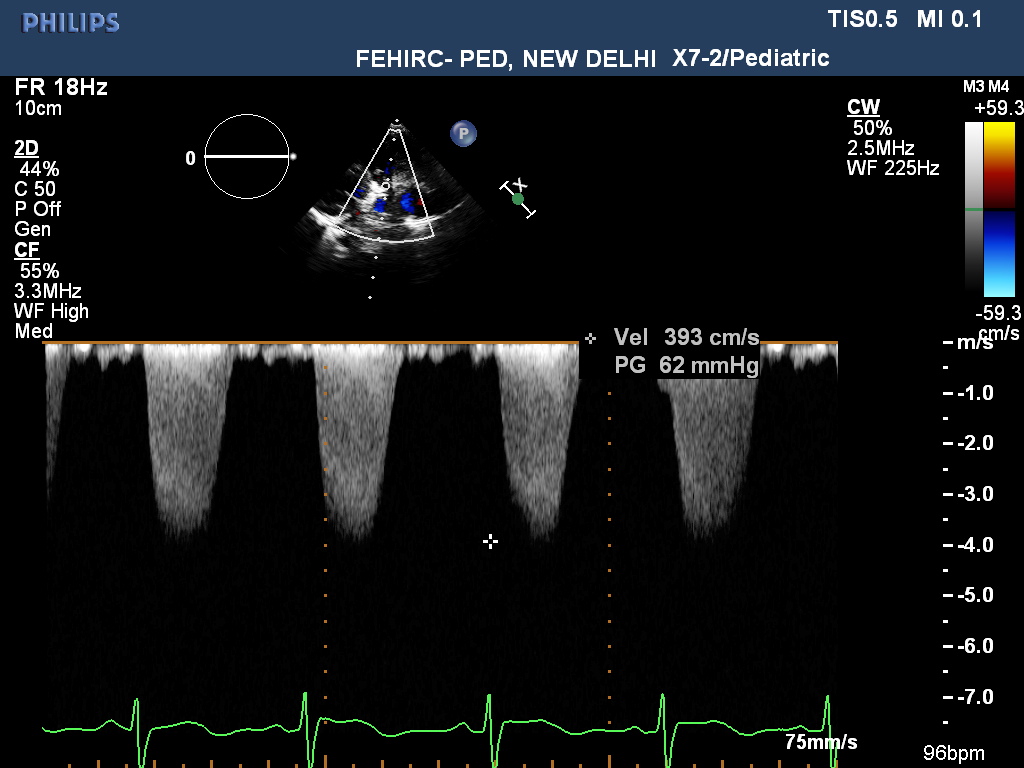
 With long standing pulmonary stenosis, right sided ventricle muscles got thickened (Right ventricle hypertrophy; RVH). In severe form of TOF, there can be total obstruction of right ventricle outflow (Pulmonary Atresia).
Additional heart diseases that can be associated with TOF can be additional VSDs, atrial septal defect(ASD), abnormal coronary arteries etc.
Majority of children who are affected with Tetralogy of Fallot (TOF) are associated with chromosomal abnormalities, such as 22q11 deletion syndrome (Digeorge Syndrome).
Due to pulmonary stenosis, there will be decreased blood supply to the lungs that leads to bluish discoloration of lips and fingers (cyanosis) due to flow of poorly oxygenated blood to the body parts through the VSD. Severity of cyanosis depends on the severity of pulmonary stenosis. Cyanosis can be seen on examination and if not visible clinically, can be assessed by saturation monitoring (SPO2).
With long standing pulmonary stenosis, right sided ventricle muscles got thickened (Right ventricle hypertrophy; RVH). In severe form of TOF, there can be total obstruction of right ventricle outflow (Pulmonary Atresia).
Additional heart diseases that can be associated with TOF can be additional VSDs, atrial septal defect(ASD), abnormal coronary arteries etc.
Majority of children who are affected with Tetralogy of Fallot (TOF) are associated with chromosomal abnormalities, such as 22q11 deletion syndrome (Digeorge Syndrome).
Due to pulmonary stenosis, there will be decreased blood supply to the lungs that leads to bluish discoloration of lips and fingers (cyanosis) due to flow of poorly oxygenated blood to the body parts through the VSD. Severity of cyanosis depends on the severity of pulmonary stenosis. Cyanosis can be seen on examination and if not visible clinically, can be assessed by saturation monitoring (SPO2).
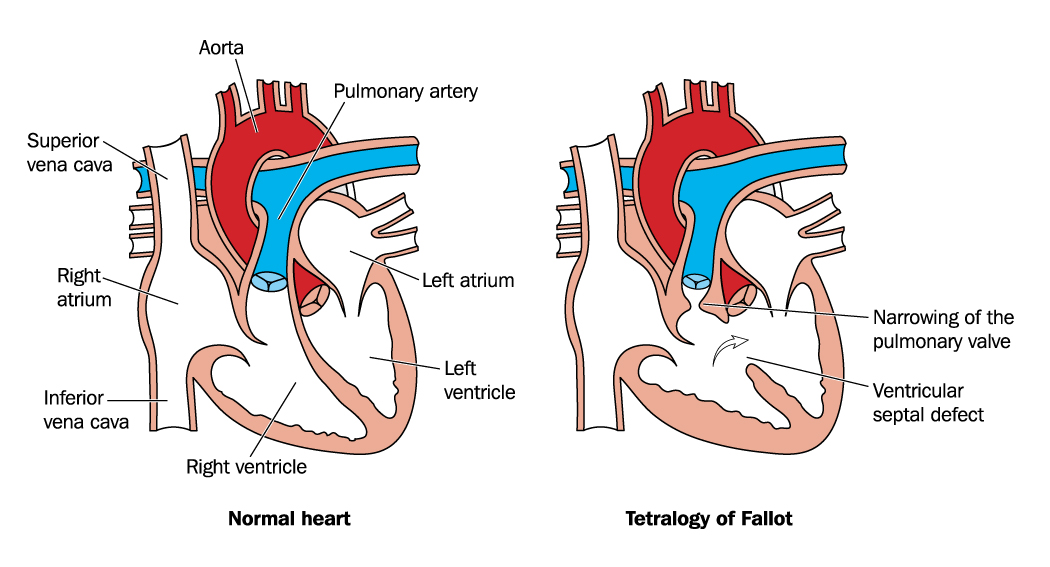 Tetralogy of Fallot Symptoms (TOF symptoms)
Tetralogy of Fallot (TOF) if severe, then can be easily diagnosed in first few days of life either due to cyanosis or due to abnormal heart sound heard by a neonatologist.
But, TOF baby (newborns) generally do not have cyanosis early in life due to presence of patent ductus arteriosus (PDA) at birth that supplies additional blood to the lungs. But as soon as PDA closes and pulmonary stenosis is severe, baby can be extremely blue and breathing can be rapid and labored.
When pulmonary stenosis is very severe then on crying, child may get “cyanotic spell” that is characterized by severe cyanosis with rapid breathing (air hunger). It sometimes can lead to seizures and loss of consciousness.
The most common sign in children with TOF is cyanosis – a tint of purple or blue on the lips, skin, and fingernails.
Other symptoms/signs to look out for include –
Tetralogy of Fallot Symptoms (TOF symptoms)
Tetralogy of Fallot (TOF) if severe, then can be easily diagnosed in first few days of life either due to cyanosis or due to abnormal heart sound heard by a neonatologist.
But, TOF baby (newborns) generally do not have cyanosis early in life due to presence of patent ductus arteriosus (PDA) at birth that supplies additional blood to the lungs. But as soon as PDA closes and pulmonary stenosis is severe, baby can be extremely blue and breathing can be rapid and labored.
When pulmonary stenosis is very severe then on crying, child may get “cyanotic spell” that is characterized by severe cyanosis with rapid breathing (air hunger). It sometimes can lead to seizures and loss of consciousness.
The most common sign in children with TOF is cyanosis – a tint of purple or blue on the lips, skin, and fingernails.
Other symptoms/signs to look out for include –
- Irritability
- Clubbing of toes and fingers
- Poor weight gain
- A heart murmur
- Cyanosis deteriorating over a period of time
- Cyanotic spells (Tet spell)
- Seizures/loss of consciousness
- Infective endocarditis (IE)– an infection of the lining of your heart
- Irregular heartbeat or arrhythmia
- First and foremost is to keep the child calm.
- We should keep the child in knee-chest position by folding the legs into abdomen and keeping the neck in flexed position.
- Immediate IV cannula, followed by rapid saline bolus and IV ketamine and subcuatneous morphine to be given.
- Oxygen
- IV metoprolol infusion
- Sadium Bicabonate IV bolus if required
- If not responding then ventilate the child
TOF
